A procurement engineer scanning a technical data sheet for a polyurethane coating line sees "ACOH" in the solvent list. A student following an esterification mechanism in an organic chemistry textbook meets the same four letters next to a carboxylic acid. Both are looking at the same compound: acetic acid, CH3COOH. In chemistry, ACOH is a compact way of writing ethanoic acid, with "Ac" representing the acetyl group and "OH" the hydroxyl group. Whether it appears in a lab manual, a solvent list, or a purchase specification, the meaning does not change.
What Does ACOH Mean in Chemistry?
The abbreviation is best read in two parts. "Ac" is the standard organic shorthand for the acetyl group (CH3CO–), and "OH" is the hydroxyl group. Together they point to CH3COOH, a simple carboxylic acid consisting of a methyl group attached to a carboxyl group. The same molecule is called ethanoic acid under IUPAC conventions and appears on food labels as E260.
Because "Ac" is also the chemical symbol for the element actinium, the acronym can confuse first-year students. In formulas and lab notebooks, ACOH never means an actinium compound; the uppercase A and lowercase c are meant to recall the acetyl unit. When ambiguity matters, chemists write HOAc or just CH3COOH.
Several notations for the same substance appear in technical documents.
| Notation |
Meaning |
Typical Context |
| AcOH / ACOH |
Acetic acid |
Organic reactions, solvent notation |
| HOAc |
Acetic acid |
Used to avoid confusion with actinium |
| CH3COOH |
Condensed structural formula |
Equations and mechanisms |
| C2H4O2 |
Molecular formula |
Stoichiometry and titrations |
| E260 |
Food additive code |
Food and beverage acidity control |
Table note: ACOH is an abbreviation, not a systematic name; the right notation depends on the audience and the document type.
Why ACOH, or Acetic Acid, Is Everywhere in the Laboratory
Acetic acid is a weak acid in the Brønsted–Lowry sense, with a pKa near 4.76. That property makes it useful for acetate buffers around pH 4.5 to 5.5 and for a broad family of lab operations. As a polar protic solvent, it dissolves many organic intermediates and mixes with water in every proportion.
In routine work, acetic acid shows up in at least five places:
- Fischer esterification, where it reacts with alcohols to give esters and water.
- Acetylation of amines, alcohols, and phenols to protect functional groups or produce acetamide derivatives.
- Buffer preparation using sodium acetate and acetic acid solutions.
- Recrystallization of polar organic compounds, often mixed with water or toluene.
- Acid-base titrations to measure the concentration of base solutions or to analyze vinegar as an applied exercise.
The brief answer to "what is ACOH in chemistry" is therefore not just the formula; it is a set of behaviors. It is a Brønsted acid, a hydrogen-bond donor, a solvent, and the source of the acetate anion (CH3COO-) that appears in countless coordination compounds and buffer systems.
Industrial and Polyurethane Processing Context
Beyond the lab bench, acetic acid is a major industrial intermediate. It is a building block for acetic anhydride, vinyl acetate monomer, cellulose acetate, and purified terephthalic acid used in PET production. In coatings and adhesives it acts as a fast-evaporating solvent and a pH-adjusting agent. In polyurethane work, the acid content is rarely the point of the formulation, but it still matters: trace acidity can neutralize amine catalysts used for gelling and blowing, which lengthens pot life and changes foam rise profiles. That is why formulators keep an eye on acid number in raw materials and solvents.
Glacial acetic acid is the anhydrous form, usually above 99.8% purity. It received the name because it forms ice-like crystals just below room temperature. In contrast, diluted solutions are the familiar vinegar-grade material. For industrial consumers, the difference is not academic: glacial acid drives esterification and acetylation reactions, releases vapor with a strong odor, and demands different storage conditions than dilute grades.
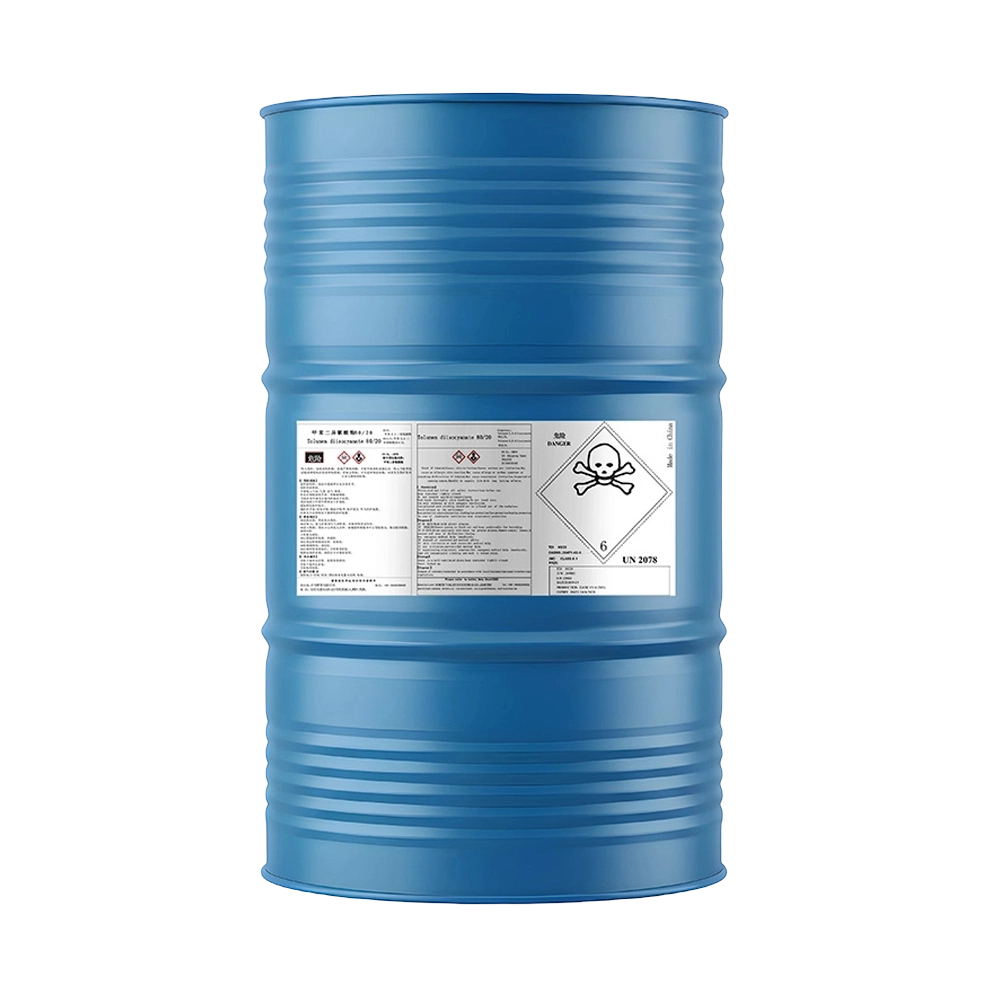
For a company buying TDI, polymeric MDI, polyether polyols, or polymer polyols, the practical question is not whether ACOH appears in one sentence of a datasheet. It is whether the whole supply chain around the intermediates can deliver consistent quality and documentation. A materials supplier such as DOMI Polyurethane positions its sourcing documents — technical data sheets, material safety data sheets, and certificates of analysis — so that a buyer can verify product quality before a shipment leaves the warehouse. That alignment matters most when a formulation change, transport delay, or batch deviation has to be traced quickly.
Specifying and Handling Acetic Acid in Real Purchases
Industrial buyers rarely order "acetic acid" without a grade. In China, industrial acetic acid is commonly specified by national standard GB/T 1628, while reagent-grade glacial acetic acid for laboratory use is usually tied to a separate standard such as GB/T 676 for chemical reagents. Concentrations change handling rules, particularly when moving between glacial acid at high strength and aqueous solutions at lower strength.
The table below summarizes the properties that affect storage and transport planning.
| Property |
Value |
Why It Matters |
| Molar mass |
60.05 g/mol |
Used in titration calculations and dosing |
| Boiling point |
118 °C |
Slow evaporation in coatings and reactor distillations |
| Melting point (glacial) |
16.6 °C |
Freezes in unheated winter storage and tanker lines |
| Density |
1.049 g/cm³ |
Heavier than water; matters for tank weighing |
| Acidity constant |
pKa ≈ 4.76 |
Defines buffer range and reactivity with bases |
| Water miscibility |
Complete |
Simplifies dilution but changes corrosion risk |
Table note: Values refer to glacial acetic acid at standard laboratory conditions unless stated otherwise.
Handling requirements follow from the physical data. Glacial acetic acid is corrosive to skin and eyes, and the vapor irritates the respiratory tract. It is not compatible with strong oxidizers, concentrated nitric acid, or sodium peroxide. Stainless steel 316L and certain polyolefin containers are common choices for storage; carbon steel drums fail in contact with the acid. A warehouse plan should include separate storage, spill containment, and clear labeling of concentration because a 5% solution and a 99.8% glacial product are not interchangeable in process or risk.
A certificate of analysis for received material should report assay, water content, appearance, and, where relevant, impurity limits. Along with the technical data sheet and safety data sheet, that document gives a receiving team enough information to confirm the right grade before the product enters the plant.
Before releasing a purchase order, a practical checklist helps:
- Confirm the grade and purity against the relevant standard, plus any internal specification.
- Check packaging compatibility, whether drums, IBCs, or bulk tankers are involved.
- Request the technical data sheet, safety data sheet, and certificate of analysis for the specific lot.
- Plan for temperature control if the product must cross regions with cold seasonal conditions.
- Verify delivery timing and documentation in the same workflow as other chemical raw materials.
When ACOH appears in a formula, a datasheet, or a purchase specification, the reading is consistent: it is acetic acid. The group that matters is the acetyl unit attached to a hydroxyl group, and the compound that results is a weak acid with outsized industrial value. What changes with context is the grade, the concentration, the container, and the paperwork. Naming the compound correctly is only the first step; knowing whether you need a reagent, a solvent, or an industrial intermediate will decide everything else that happens after the order is placed.



 English
 Français
 Español