What is toluene diisocyanate used for?
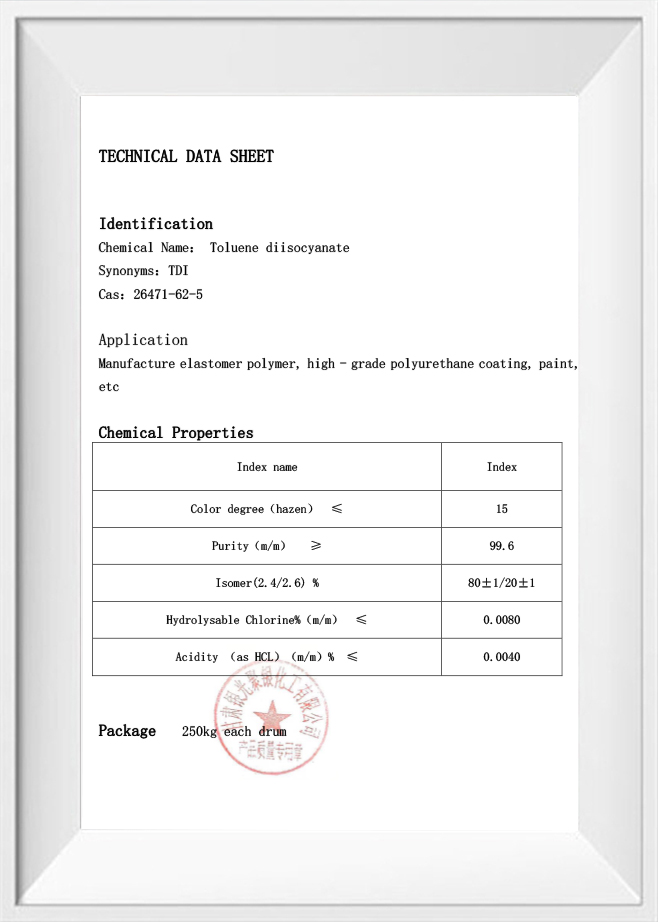
Toluene diisocyanate, commonly abbreviated as TDI, is used mainly as the core raw material for producing flexible polyurethane foam, the soft cushioning material found in furniture seating, mattresses, automotive seats and headrests, carpet underlay and packaging padding. Beyond flexible foam, toluene diisocyanate also serves as a building block for polyurethane coatings, adhesives, sealants, elastomers and elastic fibers such as spandex. Roughly eighty percent of global toluene diisocyanate output goes into flexible slabstock and molded foam production, making this the defining application that shapes how the compound is manufactured, traded and formulated across the polyurethane supply chain.
The sections below break down each major use case for toluene diisocyanate in practical detail, including the chemistry behind its reactivity, the specific industries that rely on it, typical isomer ratios used in production, and how demand for this chemical is distributed across regions and end markets.
Understanding Toluene Diisocyanate and Its Chemical Grades
Toluene diisocyanate belongs to the diisocyanate family of organic compounds, characterized by two reactive isocyanate groups attached to a toluene ring. This dual reactive site is what allows toluene diisocyanate to react readily with polyols to form the urethane linkages that give polyurethane foam its elastic, cushioning structure. Industrial toluene diisocyanate is sold primarily in two isomer blends that determine how it performs in downstream foam formulations.
The 80/20 and 65/35 Isomer Blends
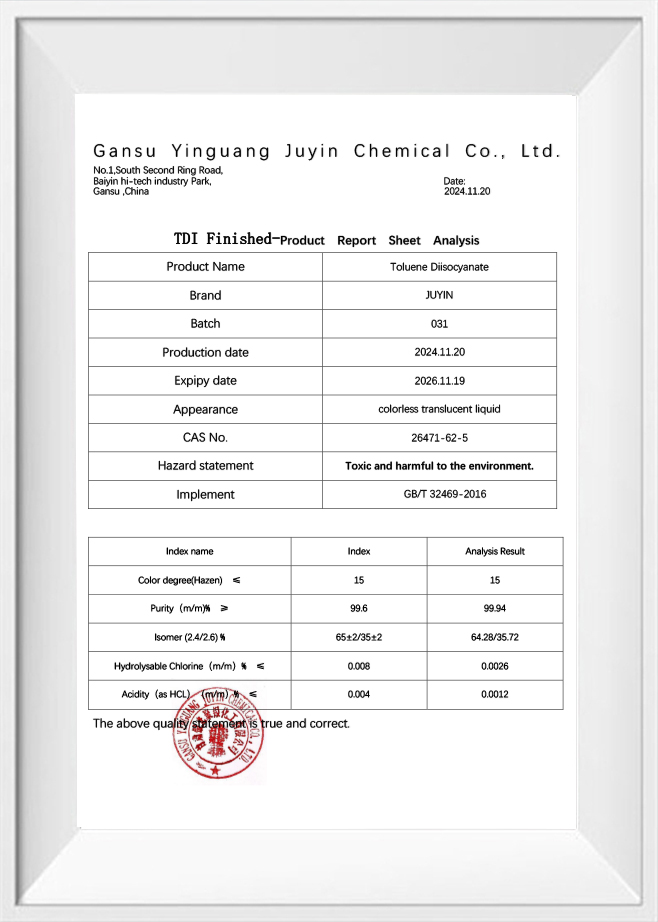
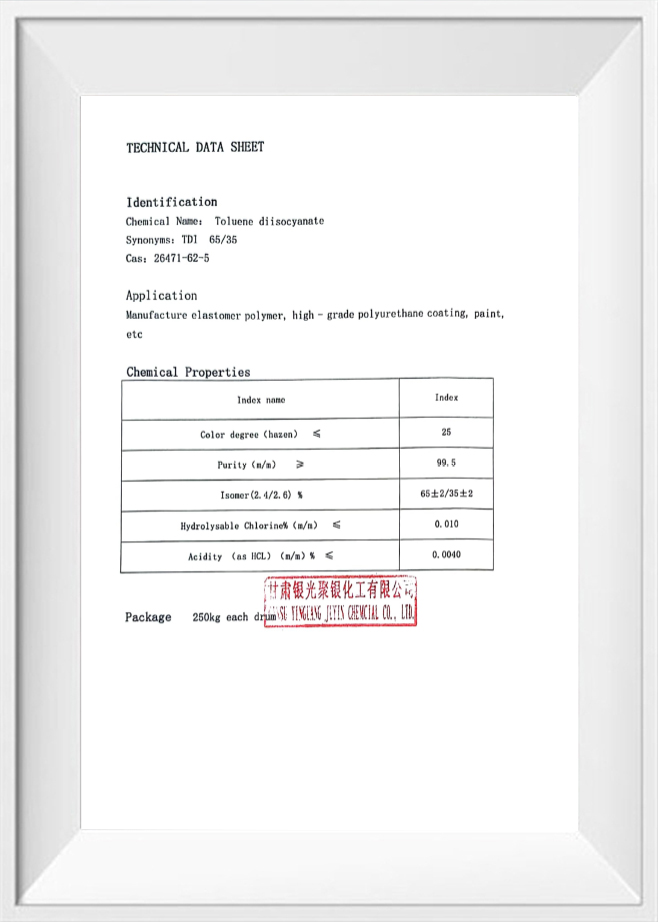
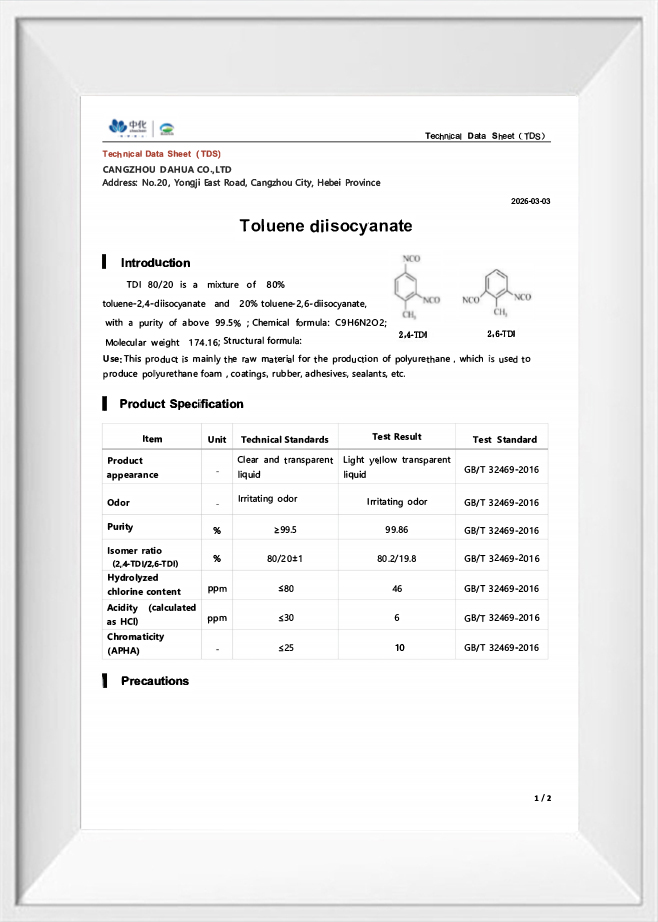
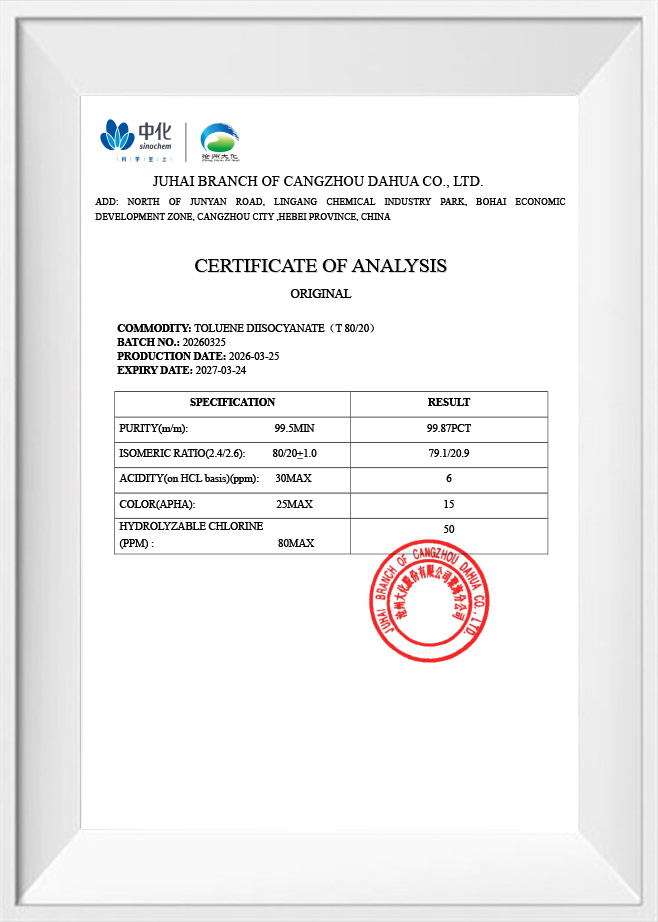
The most widely traded grade is TDI 80/20, meaning a mixture containing eighty percent of the 2,4-isomer and twenty percent of the 2,6-isomer. This blend is favored for flexible slabstock foam because of its balanced reactivity and consistent cell structure. A second common grade, TDI 65/35, contains a higher proportion of the 2,6-isomer and is generally selected for molded foam applications where a slightly different curing profile is needed to match mold geometry and demold time.
Common toluene diisocyanate isomer grades and their typical foam application
Grade Name
Isomer Ratio
Primary Foam Type
Typical End Product
TDI 80/20
80 percent 2,4 isomer
Slabstock flexible foam
Mattress cores, furniture cushions
TDI 65/35
65 percent 2,4 isomer
Molded flexible foam
Automotive seat cushions, headrests
Crude TDI blends
Mixed isomer residue
Rigid and semi rigid foam
Insulation panels, packaging foam
Flexible Polyurethane Foam Manufacturing: The Leading Use Case
The single largest consumer of toluene diisocyanate worldwide is flexible polyurethane foam production. When toluene diisocyanate reacts with a polyether polyol in the presence of water, catalysts and surfactants, the reaction generates carbon dioxide gas that expands the mixture into an open cell foam structure. This process, known as slabstock foaming, produces continuous foam buns that are later sliced into sheets for mattresses, sofa cushions, chair padding and carpet underlay.
Why Toluene Diisocyanate Is Preferred for This Process
Manufacturers favor toluene diisocyanate over other diisocyanates for flexible foam because its reaction speed and gas generation profile are well matched to continuous production lines. According to industry data compiled by the American Chemistry Council, flexible foam applications account for the majority share of total toluene diisocyanate consumption in North America, with bedding and furniture representing the two largest end use segments within that category.
Mattress cores and comfort layers for the bedding industry
Sofa and chair cushioning for residential and commercial furniture
Carpet cushion and underlay padding
Packaging foam for shipping fragile goods
Sound absorbing acoustic foam panels
Automotive Industry Applications of Toluene Diisocyanate Foam
The automotive sector is the second major driver of toluene diisocyanate demand, using molded flexible foam grades to produce seat cushions, backrests, armrests and headrests. Molded foam differs from slabstock in that the reacting mixture is poured directly into a mold shaped like the finished part, allowing automakers to achieve precise density gradients that improve comfort and support in different zones of a seat.
Interior Comfort Components
A typical passenger vehicle seat assembly uses several kilograms of molded polyurethane foam derived from toluene diisocyanate reacted with specialty polyether polyols. Automotive grade foam formulations are engineered for a longer service life and better resistance to compression set compared to standard furniture foam, since seating must retain its shape through years of repeated use.
Beyond the Seat
Toluene diisocyanate based foam systems also appear in sun visors, arm rests, sound dampening layers under carpeting, and in some interior trim padding. As vehicle interiors continue to emphasize acoustic comfort, foam density and cell structure derived from toluene diisocyanate formulations play a direct role in cabin noise reduction performance.
Coatings, Adhesives, Sealants and Elastomers
Outside of foam, toluene diisocyanate is a key raw material in what the industry refers to as the CASE segment, standing for coatings, adhesives, sealants and elastomers. In this segment, toluene diisocyanate is typically reacted first with a polyol to create a prepolymer, which is then cured to form a tough, abrasion resistant polymer network.
Toluene diisocyanate applications within the CASE industry segment
Application Area
Function of Toluene Diisocyanate
Example Product
Wood coatings
Prepolymer hardener component
Floor and furniture varnish
Industrial adhesives
Crosslinking agent for bonding strength
Laminating adhesives for packaging film
Elastomer rollers
Polymer backbone builder
Printing press and industrial rollers
These prepolymer based systems are valued for their strong adhesion to metal, wood and plastic substrates, along with good resistance to abrasion and chemical exposure, which is why they remain common in industrial flooring coatings and heavy duty adhesive formulations.
Elastic Fiber and Specialty Textile Applications
A smaller but technically important use of toluene diisocyanate is in the production of polyurethane elastic fibers, most notably spandex, also known by the trade name Lycra. In this application, toluene diisocyanate is reacted with a long chain polyol to form a segmented polyurethane polymer that is then spun into fine elastic filaments. These fibers are prized for their ability to stretch several times their original length and recover their original shape, a property that makes them essential in sportswear, hosiery, swimwear and form fitting garments.
Why Elastane Manufacturers Choose This Chemistry
The segmented structure created through toluene diisocyanate based polymerization gives elastane fiber its characteristic combination of high elasticity and durability under repeated stretching cycles, a performance profile that is difficult to replicate with alternative fiber chemistries at comparable cost.
Rigid Foam and Other Specialty Uses
While methylene diphenyl diisocyanate dominates the rigid insulation foam market, certain crude and polymeric toluene diisocyanate blends are still used in semi rigid and rigid foam applications where specific processing characteristics are required, such as packaging foam that needs to combine light weight with impact absorption.
Semi rigid foam for protective packaging inserts
Reaction injection molded parts for industrial equipment housings
Specialty binder systems for composite wood products
Microcellular foam components used in shoe soles
Global Production and Regional Demand Patterns
Toluene diisocyanate production is concentrated among a relatively small number of large chemical manufacturers due to the capital intensity of the phosgenation process used to manufacture it. According to market research published by IHS Markit, Asia Pacific represents the largest regional share of global toluene diisocyanate consumption, driven primarily by furniture and bedding manufacturing activity in China and Southeast Asia, followed by North America and Europe where automotive and specialty foam applications carry relatively greater weight in the overall demand mix.
Key Demand Drivers Going Forward
Construction activity, furniture replacement cycles, and automotive production volumes are the three variables most closely tracked by toluene diisocyanate producers when forecasting demand, since these three end markets together account for the overwhelming majority of global consumption of the chemical.
Frequently Asked Questions About Toluene Diisocyanate
What industry consumes the most toluene diisocyanate
The flexible polyurethane foam industry, particularly bedding and furniture manufacturing, consumes the largest share of toluene diisocyanate produced globally each year.
Is toluene diisocyanate the same as MDI
No. Toluene diisocyanate and methylene diphenyl diisocyanate are two distinct diisocyanate chemistries. Toluene diisocyanate is generally used for flexible foam, while methylene diphenyl diisocyanate is more common in rigid insulation foam and certain elastomer applications.
Why does the automotive industry rely on molded toluene diisocyanate foam
Molded foam allows automakers to create seat cushions with varying density zones in a single molding step, producing a more comfortable and durable seat than foam cut from a slabstock sheet.
Which isomer blend is used for mattress foam
TDI 80/20 is the isomer blend most commonly used in continuous slabstock production lines that manufacture mattress and cushioning foam.
Does toluene diisocyanate appear in clothing fibers
Yes, in a modified form. It is used as a raw material in the production of segmented polyurethane elastane fiber, commonly known by the trade name spandex, which is widely used in stretch clothing.
.article-quickanswer, .article-composition, .article-foam, .article-automotive, .article-case, .article-fiber, .article-rigid, .article-market, .article-faq {
margin-bottom: 40px;
font-size: 16px;
line-height: 2;
}
.article-quickanswer {
background-color: #eaf4ff;
border-left: 4px solid #007aff;
padding: 20px 24px;
border-radius: 6px;
}
.article-quickanswer p {
font-size: 16px;
line-height: 2;
margin-bottom: 15px;
text-align: left;
}
.article-composition h2, .article-foam h2, .article-automotive h2, .article-case h2, .article-fiber h2, .article-rigid h2, .article-market h2, .article-faq h2 {
font-size: 22px;
font-weight: bold;
text-align: left;
color: #007aff;
margin-bottom: 15px;
padding-bottom: 8px;
border-bottom: 2px solid #cce4ff;
}
.article-composition h3, .article-foam h3, .article-automotive h3, .article-case h3, .article-fiber h3, .article-rigid h3, .article-market h3, .article-faq h3 {
font-size: 16px;
font-weight: bold;
text-align: left;
color: #005bb5;
margin-bottom: 15px;
}
.article-composition p, .article-foam p, .article-automotive p, .article-case p, .article-fiber p, .article-rigid p, .article-market p, .article-faq p {
font-size: 16px;
line-height: 2;
text-align: left;
margin-bottom: 15px;
color: #333333;
}
.article-composition {
background-color: #ffffff;
padding: 24px;
border: 1px solid #e0ecfb;
border-radius: 8px;
}
.article-foam {
background-color: #f5faff;
padding: 24px;
border-radius: 8px;
box-shadow: 0 2px 8px rgba(0, 122, 255, 0.08);
}
.article-foam ul {
margin-bottom: 15px;
}
.article-foam li {
list-style-type: disc;
list-style-position: inside;
font-size: 16px;
line-height: 2;
margin-bottom: 5px;
text-align: left;
color: #333333;
}
.article-automotive {
padding: 24px;
border: 1px dashed #99c9ff;
border-radius: 8px;
background-color: #ffffff;
}
.article-case {
background-color: #f0f7ff;
padding: 24px;
border-radius: 8px;
border-top: 3px solid #007aff;
}
.article-fiber {
background-color: #ffffff;
padding: 24px;
border-radius: 8px;
border: 1px solid #d6e9ff;
position: relative;
}
.article-fiber::before {
content: "";
display: block;
width: 48px;
height: 4px;
background-color: #007aff;
margin-bottom: 15px;
border-radius: 2px;
}
.article-rigid {
background-color: #f7fbff;
padding: 24px;
border-radius: 8px;
}
.article-rigid ul {
margin-bottom: 15px;
}
.article-rigid li {
list-style-type: disc;
list-style-position: inside;
font-size: 16px;
line-height: 2;
margin-bottom: 5px;
text-align: left;
color: #333333;
}
.article-market {
background-color: #ffffff;
padding: 24px;
border-radius: 8px;
border-left: 4px solid #007aff;
}
.article-faq {
background-color: #eaf4ff;
padding: 24px;
border-radius: 8px;
}
.article-faq h3 {
color: #007aff;
border-bottom: 1px solid #cce4ff;
padding-bottom: 6px;
}
table caption {
caption-side: bottom;
font-size: 16px;
margin-bottom: 12px;
font-style: italic;
color: #808080;
}
@media only screen and (max-width: 600px) {
.article-composition h2, .article-foam h2, .article-automotive h2, .article-case h2, .article-fiber h2, .article-rigid h2, .article-market h2, .article-faq h2 {
font-size: 20px;
}
.article-composition, .article-foam, .article-automotive, .article-case, .article-fiber, .article-rigid, .article-market, .article-faq {
padding: 16px;
}
table {
font-size: 14px;
}
th, td {
padding: 6px;
}
}
Read More




 English
 Français
 Español