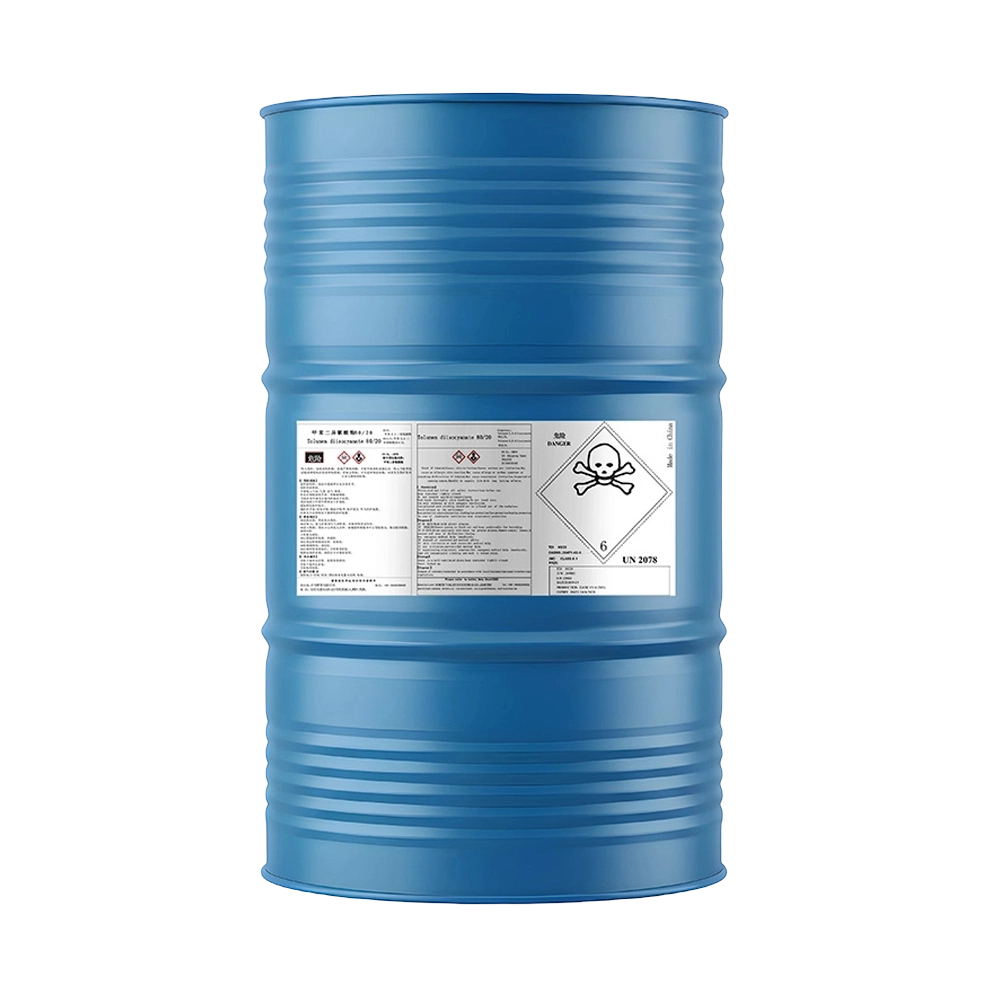
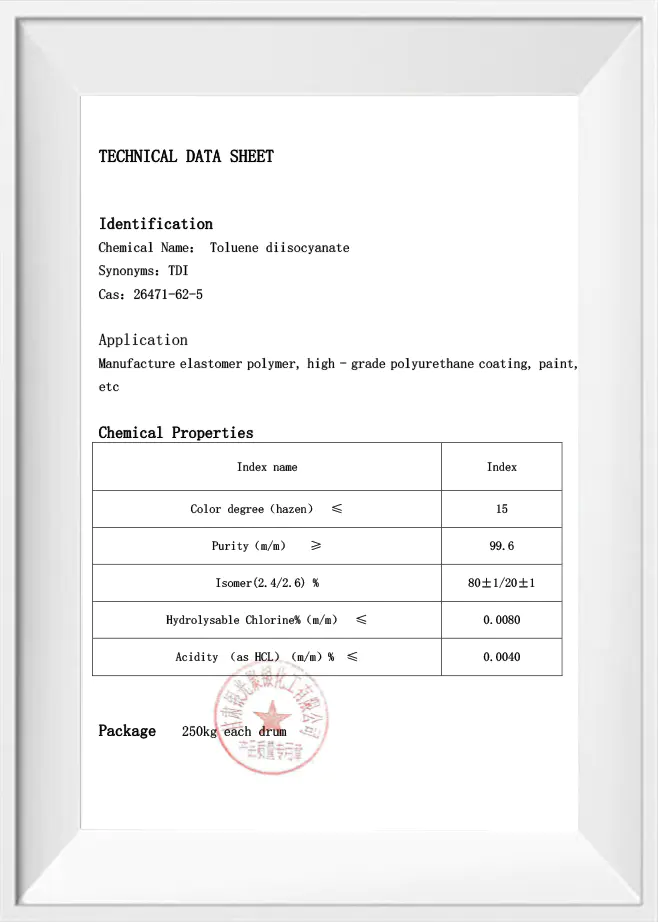
Yinguang Juyin TDI 80/20 Flexible Foam Grade Isocyanate is a toluene diisocyanate (TDI) product manufactured under the Gansu Yinguang brand, blended at the industry-standard 80/20 isomer ratio (2,4-TDI to 2,6-TDI). This ratio is the most widely accepted specification for slabstock and molded flexible foam production because it delivers a balanced reactivity profile, giving foam producers consistent cell structure, controllable rise time, and predictable curing behavior. As a grade specifically formulated for flexible foam, it is distinct from rigid-foam or coatings-oriented isocyanates, and is engineered to work reliably with standard polyether polyol systems used in cushioning applications.
Key Advantages of Yinguang Juyin TDI 80/20
Foam manufacturers choosing this grade typically benefit from the following:
- Stable 80/20 isomer ratio for consistent reaction kinetics batch after batch.
- Low free-monomer variation, supporting a more predictable NCO index in formulation.
- Good compatibility with polyether polyols, water blowing agents, and standard amine/tin catalyst packages.
- Suitable for both continuous slabstock lines and discontinuous molded foam processes.
- Cost-competitive positioning relative to specialty MDI systems for general-purpose flexible foam.
How Yinguang Juyin TDI 80/20 Works in Flexible Foam Production
Reaction Mechanism
In flexible foam manufacturing, the isocyanate group (-NCO) in TDI reacts with hydroxyl groups (-OH) in polyether polyol to form urethane linkages, while a parallel reaction with water generates carbon dioxide gas, which acts as the primary blowing agent. Because 2,4-TDI reacts faster than 2,6-TDI, the 80/20 ratio provides a reactivity profile that allows gelling and blowing reactions to proceed in balance, which is critical for achieving open, uniform cell structures rather than collapsed or overly rigid foam.
Process Considerations
Correct NCO index control (typically in the 100–115 range for standard flexible foam) directly affects foam hardness, resilience, and airflow. Foam producers usually run trial batches when switching TDI sources to fine-tune catalyst dosage and index, since minor viscosity or free-TDI variations between suppliers can shift the optimal formulation window.
Typical Applications
| Foam Type |
Typical End Use |
Density Range (kg/m³) |
| Slabstock Foam |
Mattresses, upholstery cushioning |
18–35 |
| Molded Flexible Foam |
Automotive seating, headrests |
40–60 |
| High-Resilience Foam |
Sofa cushions, furniture padding |
30–50 |
General industry reference ranges for flexible foam applications; actual density depends on formulation.
Sourcing Yinguang Juyin TDI 80/20 Through DOMI (HK) INDUSTRIAL
DOMI (HK) INDUSTRIAL CO., LIMITED, established in 2022 and headquartered in Hong Kong, is an official authorized distributor for globally recognized polyurethane manufacturers, including the producer of the Yinguang Juyin TDI 80/20 grade. With annual sales exceeding 50,000 metric tons and a customer network spanning more than 30 countries and regions, DOMI (HK) INDUSTRIAL focuses on stable, high-quality, and cost-effective supply of TDI and related polyurethane raw materials. Customers sourcing this flexible foam grade through DOMI benefit from documentation support such as MSDS, TDS, and COA, along with flexible sea and land transportation arrangements designed to simplify cross-border procurement.
Frequently Asked Questions
Q1: What does the "80/20" in Yinguang Juyin TDI 80/20 mean?
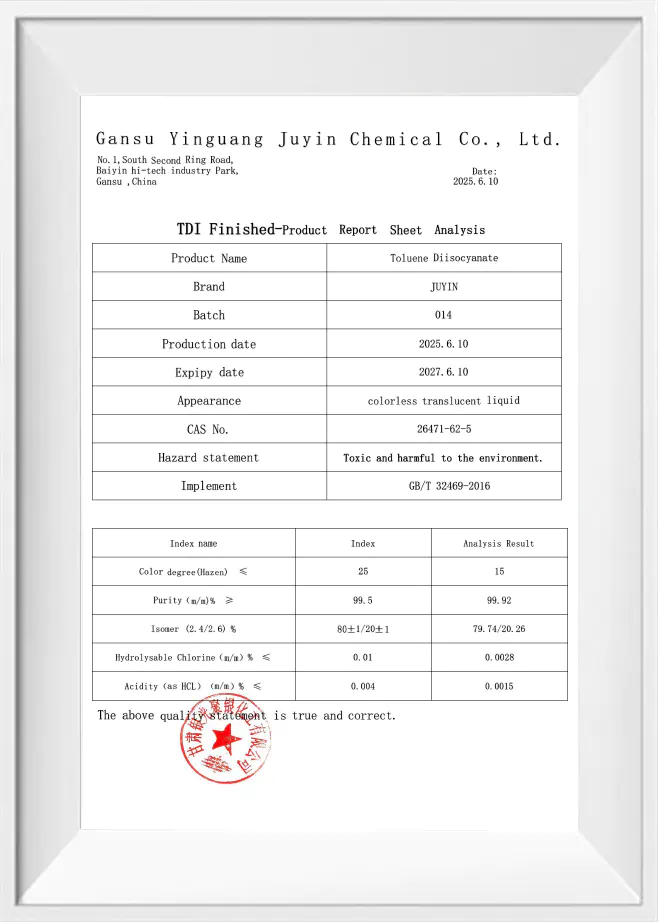
It refers to the isomer composition: 80% 2,4-TDI and 20% 2,6-TDI, which is the standard ratio used for flexible foam-grade toluene diisocyanate.
Q2: Is this grade suitable for rigid foam applications?
No. This grade is formulated for flexible foam. Rigid foam typically relies on polymeric MDI systems rather than TDI 80/20.
Q3: How should Yinguang Juyin TDI 80/20 be stored?
It should be stored in sealed, moisture-free containers, away from direct sunlight and sources of moisture, since TDI reacts readily with water and humid air.
Q4: What documentation is typically provided with a shipment?
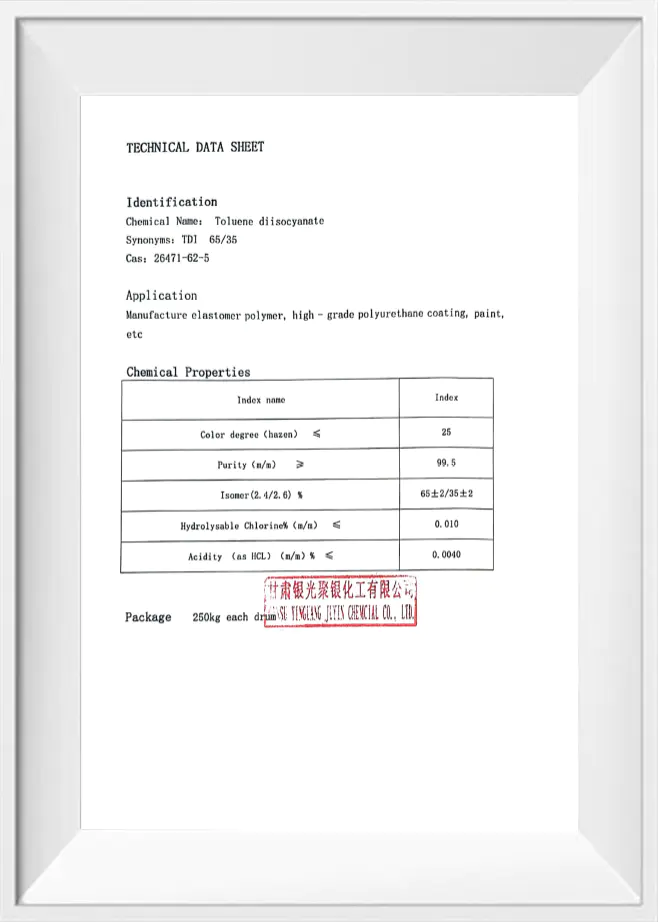
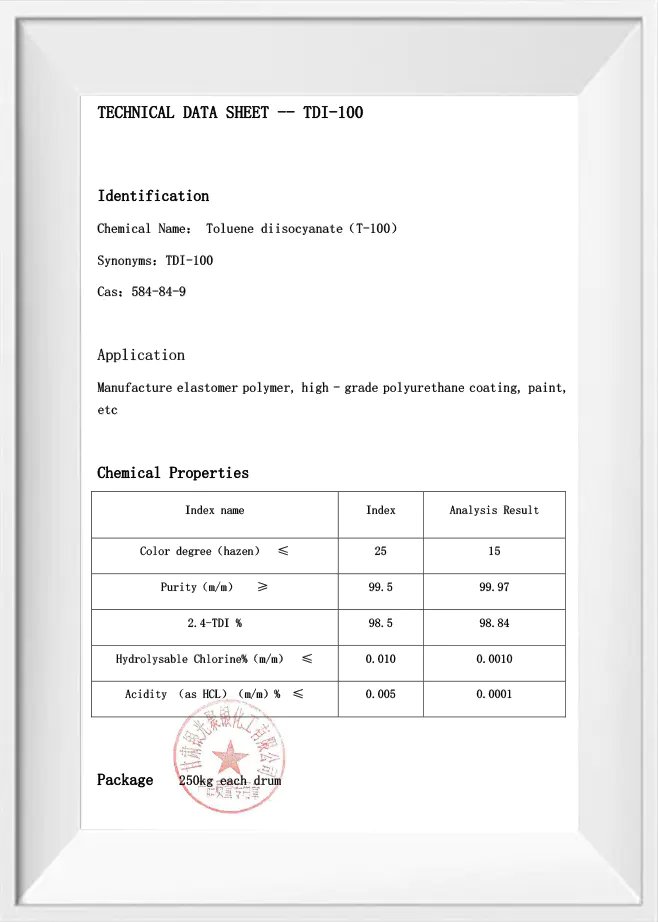
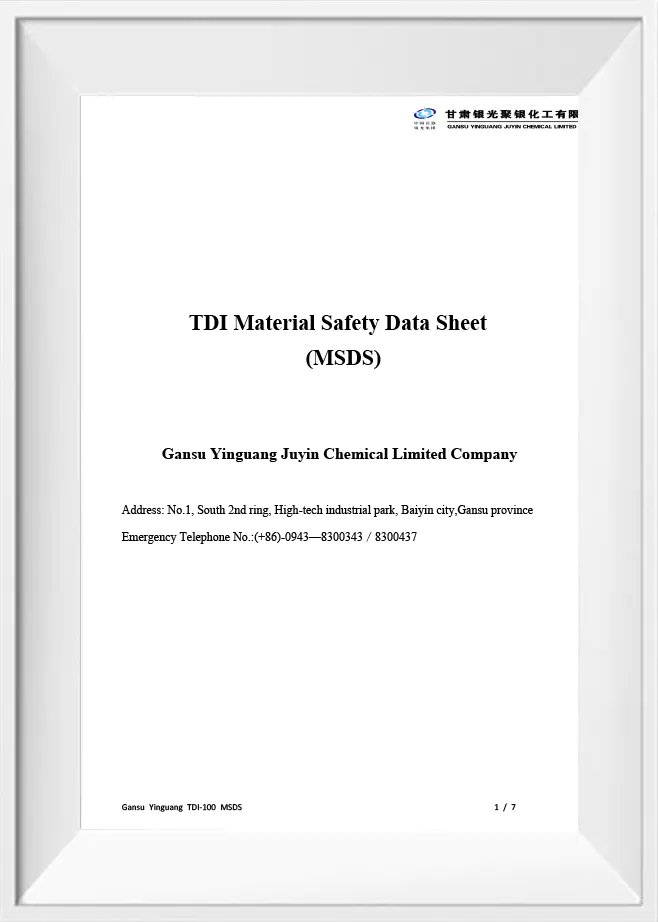
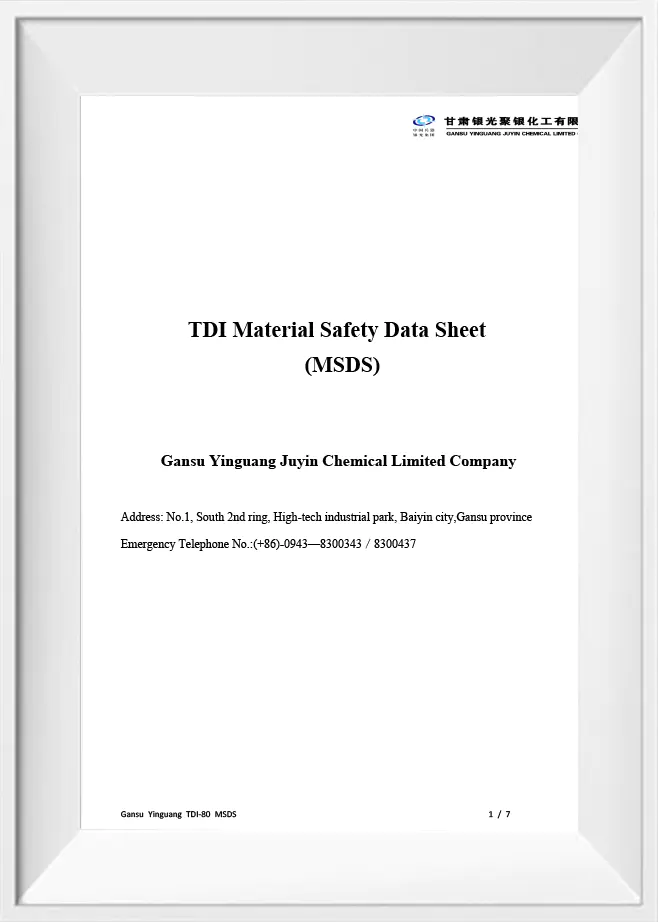
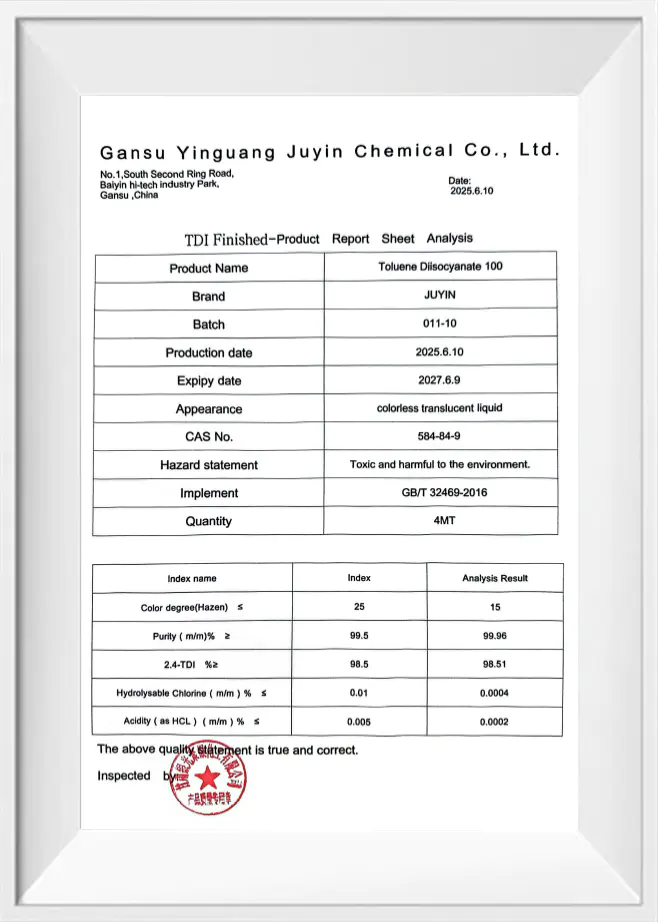
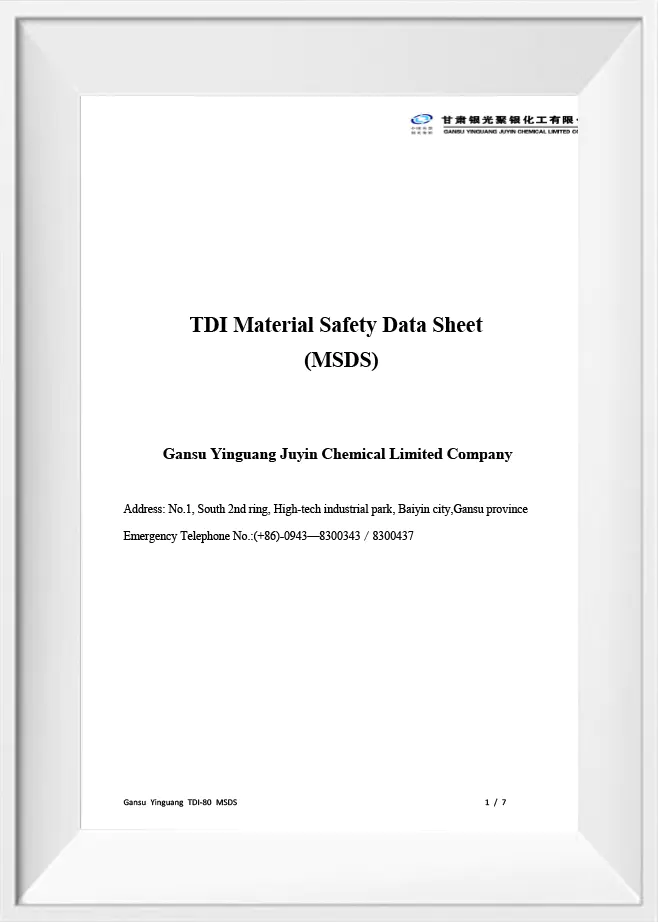
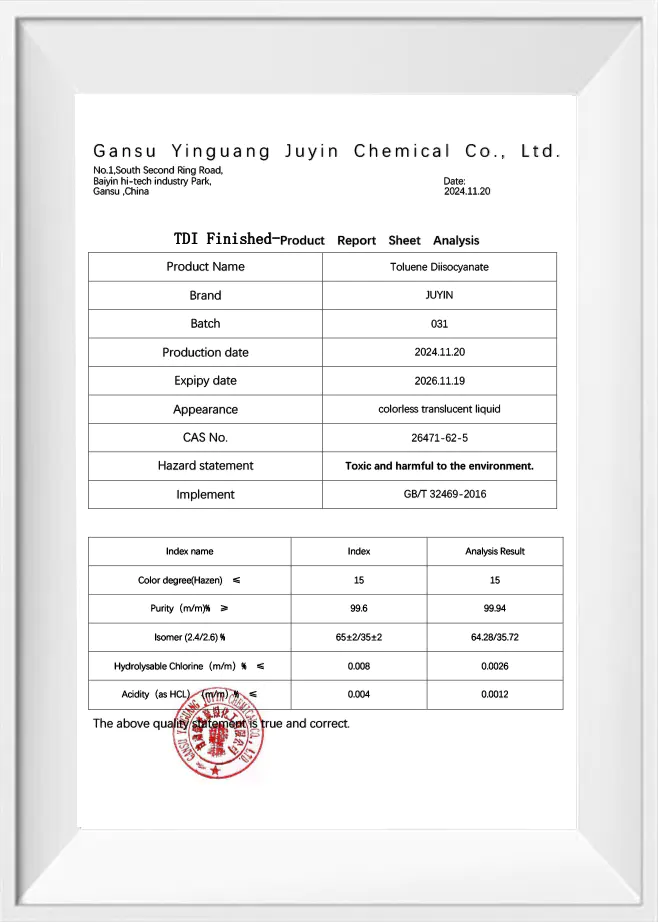
Standard documentation usually includes a Material Safety Data Sheet (MSDS), Technical Data Sheet (TDS), and Certificate of Analysis (COA) confirming batch-specific specifications.




 English
 Français
 Español