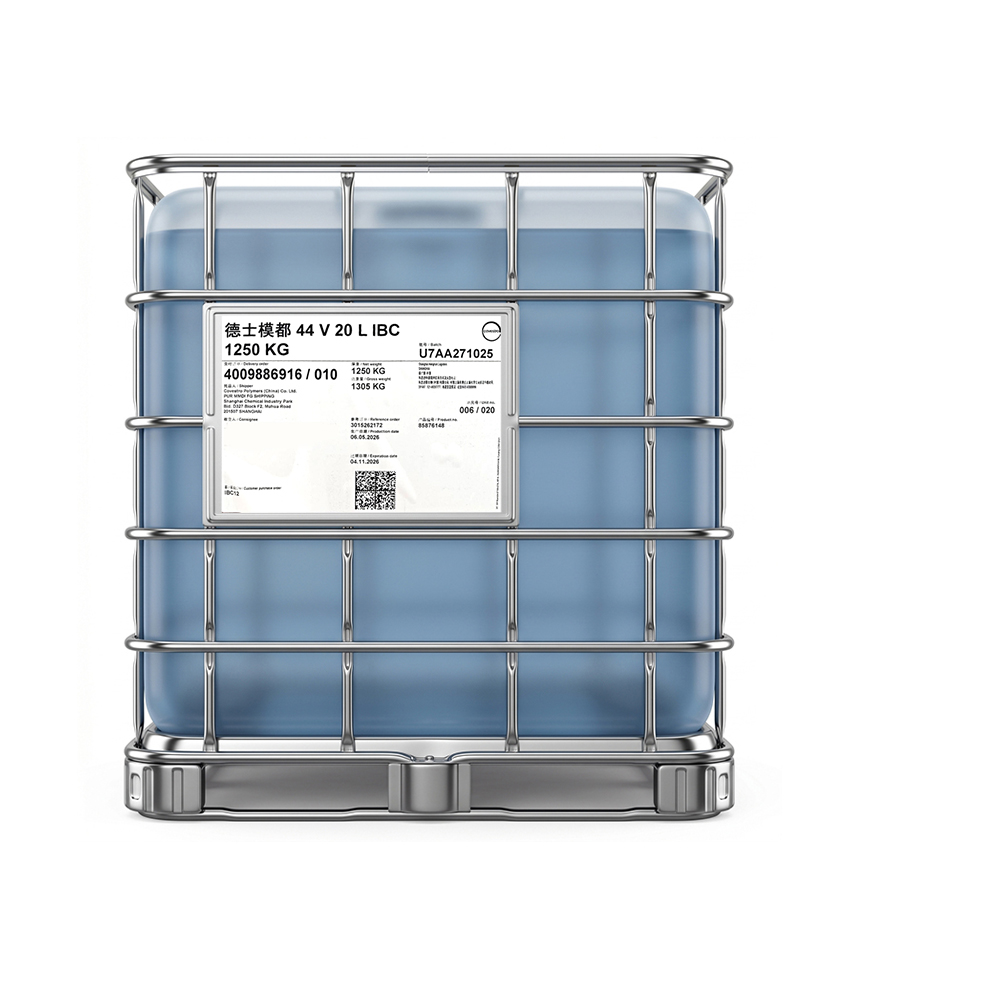
Understanding WANOL F3156A Polyether Polyol
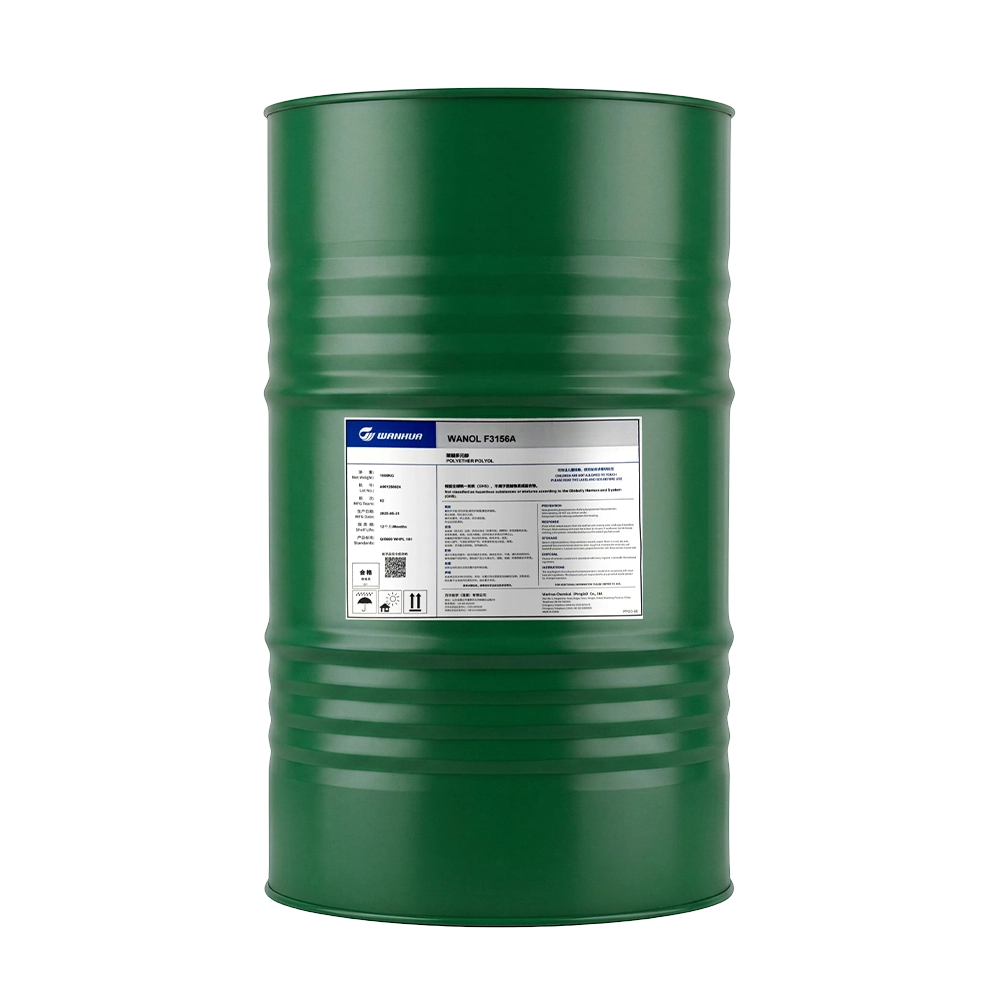
WANOL F3156A Polyether Polyol is a specialty polyether polyol widely used as a core raw material in flexible and semi-flexible polyurethane foam systems. As a polyol built on a polyether backbone, it reacts with isocyanates such as TDI and Polymeric MDI to form polyurethane networks with tailored softness, resilience, and load-bearing behavior. Formulators value WANOL F3156A Polyether Polyol for the consistent processing window it offers, which helps reduce batch-to-batch variation on high-speed foaming lines.
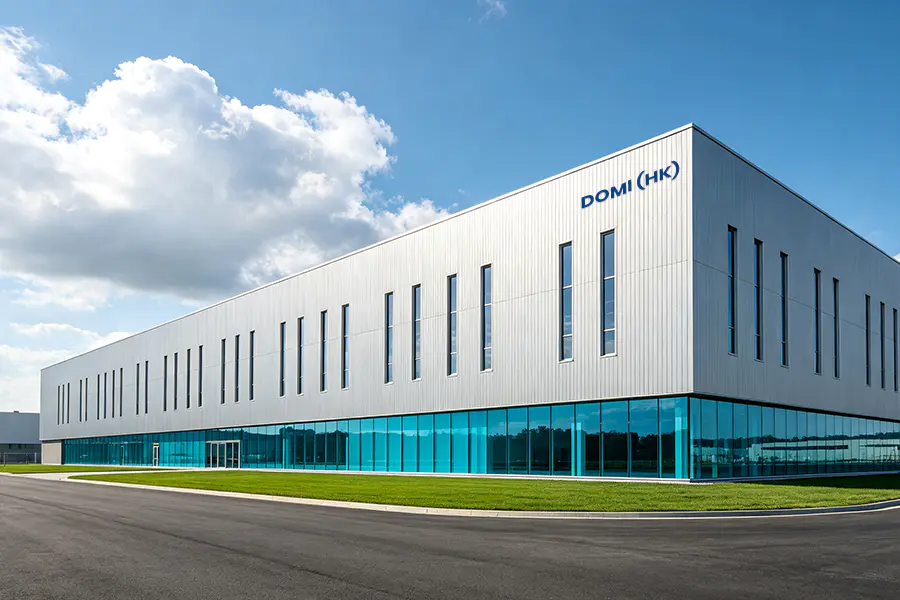
As a supply partner in the polyurethane raw material market, DOMI (HK) INDUSTRIAL CO., LIMITED is an official authorized distributor for world-class polyurethane manufacturers, including Covestro, Wanhua Chemical, Cangzhou Dahua, and Gansu Yinguang. With annual sales exceeding 50,000 metric tons and customers across more than 30 countries, DOMI (HK) INDUSTRIAL supports foam producers with stable and cost-effective sourcing of Polyether Polyol grades.
Key Advantages of WANOL F3156A Polyether Polyol
- Balanced hydroxyl functionality that supports predictable cross-link density in the finished foam
- Good compatibility with common additives such as amine and metal catalysts, silicone surfactants, and blowing agents
- Stable viscosity that eases metering and mixing accuracy on continuous or discontinuous foaming equipment
- Contributes to foam with favorable resilience and comfortable hand-feel, suited to cushioning applications
- Reliable low-color, low-odor profile that helps finished products meet indoor air quality expectations
Because WANOL F3156A Polyether Polyol is engineered for foam-grade consistency, it can help converters reduce rework rates and hold tighter tolerances on foam density and hardness across production runs.
How WANOL F3156A Polyether Polyol Works in Foam Systems
Reaction Mechanism
The hydroxyl (-OH) end groups on WANOL F3156A Polyether Polyol react exothermically with isocyanate (-NCO) groups to build urethane linkages. Alongside this gelling reaction, water in the formulation reacts with isocyanate to generate carbon dioxide, which expands the mixture into a cellular foam structure. The balance between the gelling reaction (driven by the polyol) and the blowing reaction determines cell opening, rise profile, and final foam stability.
Typical Property Reference
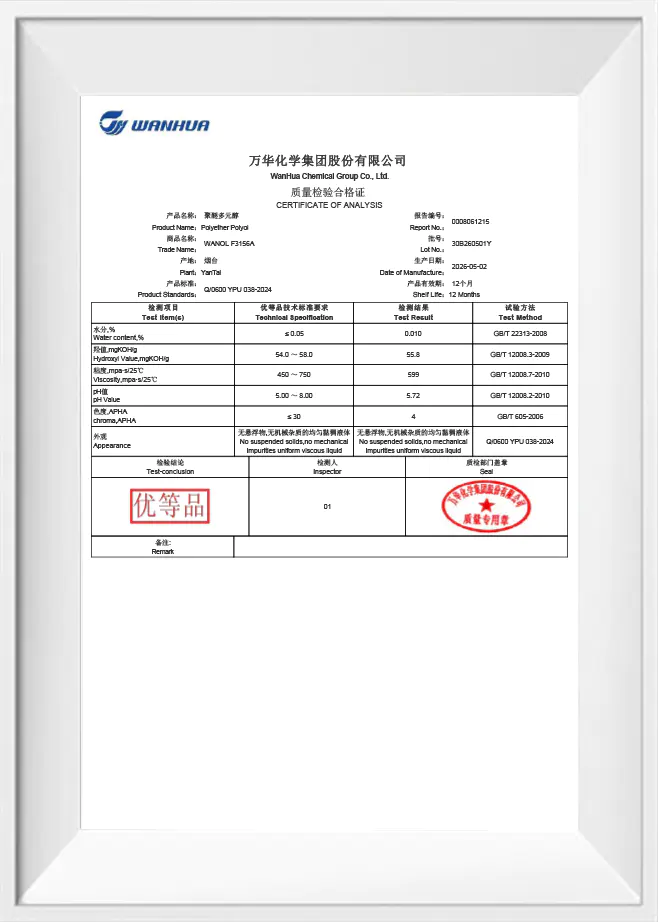
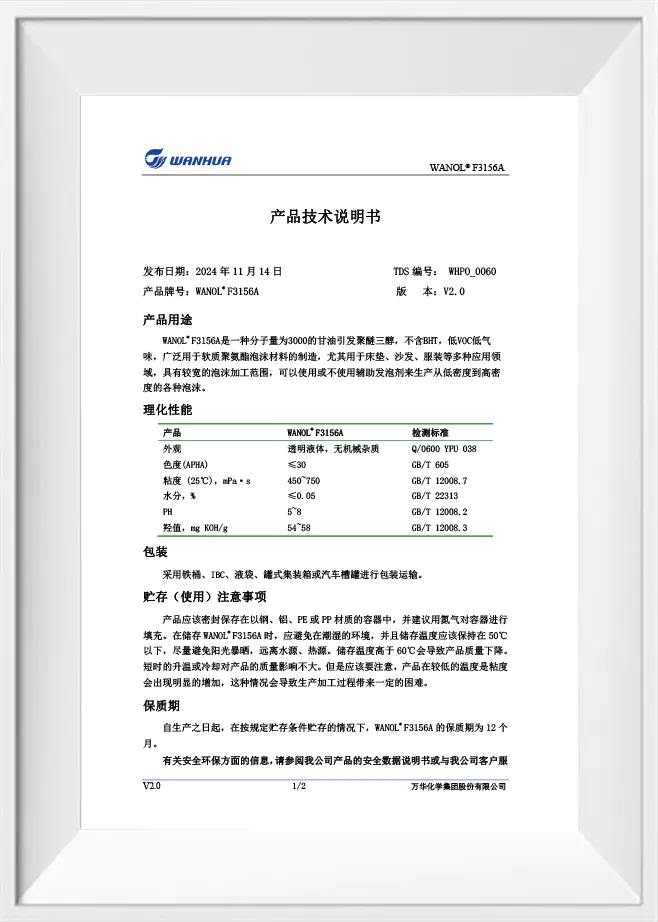
Typical reference parameters for polyether polyols in the F3156A performance class; actual values should be confirmed against the current technical data sheet (TDS).
| Parameter |
Typical Range |
Relevance to Foam |
| Hydroxyl Value |
Foam-grade range |
Controls cross-link density and hardness |
| Functionality |
Tri-functional class |
Affects network elasticity and recovery |
| Viscosity (25°C) |
Moderate, pumpable range |
Impacts mixing accuracy and dispensing |
| Moisture Content |
Low, controlled |
Limits uncontrolled CO2 generation |
Application Areas for WANOL F3156A Polyether Polyol
Foam producers select WANOL F3156A Polyether Polyol for several end markets where consistent softness and durability are required:
- Furniture cushioning and upholstered seating foam
- Mattress core and comfort-layer foam
- Automotive interior padding and headrest components
- General-purpose flexible foam for packaging and cushioning inserts
Across these applications, formulators typically pair WANOL F3156A Polyether Polyol with Polymeric MDI or TDI, adjusting index and additive packages to hit target density, indentation load deflection, and airflow specifications.
Sourcing and Supply Considerations
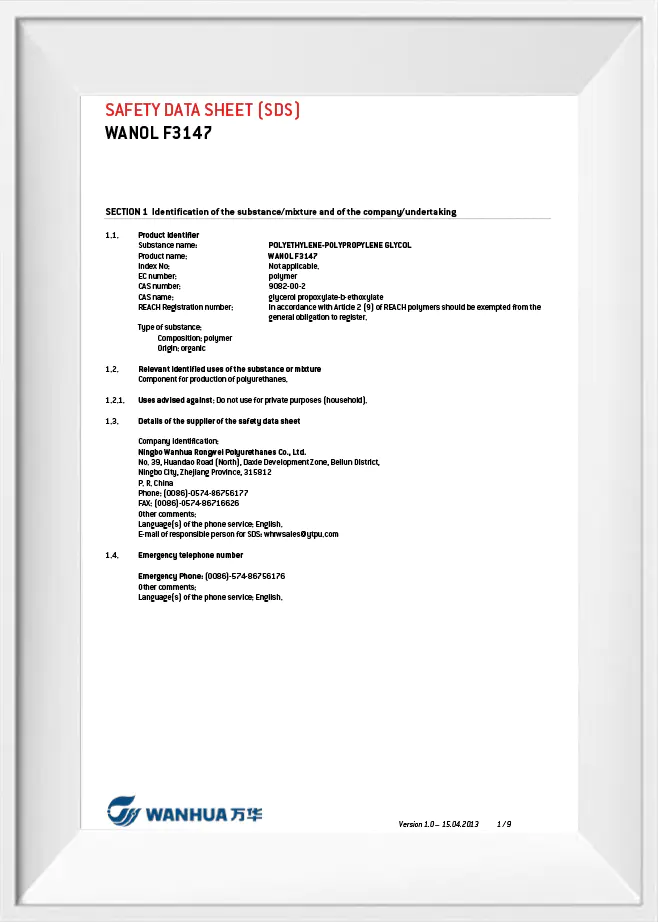
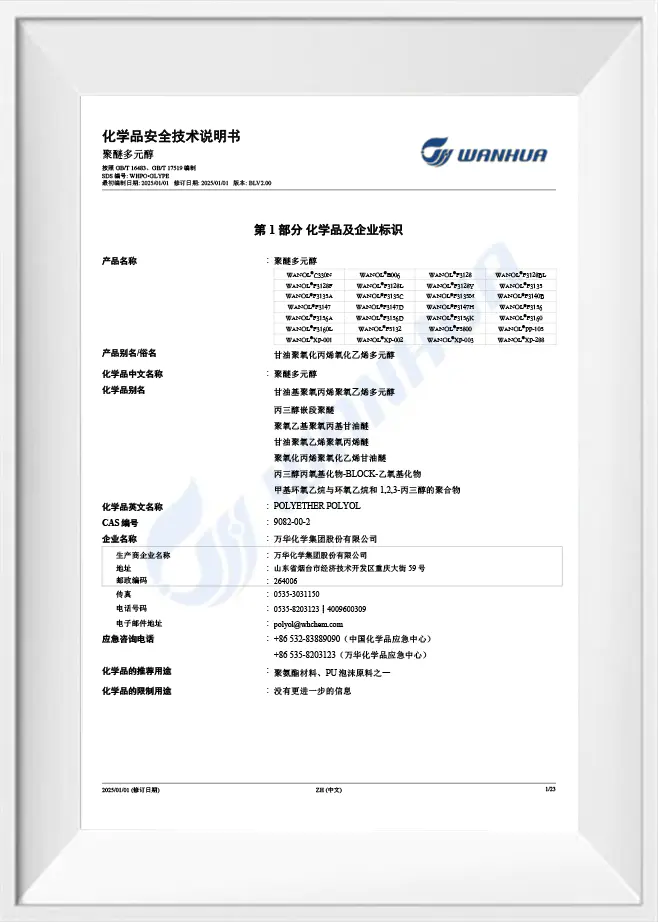
Consistent access to WANOL F3156A Polyether Polyol depends on a supplier's inventory depth and logistics network. Established in 2022 and headquartered in Hong Kong, DOMI (HK) INDUSTRIAL CO., LIMITED leverages strong partnerships with leading producers to ensure a stable and reliable supply of premium polyurethane raw materials worldwide. Its core product portfolio, spanning TDI, Polymeric MDI, Polyether Polyol, and Polymer Polyol (POP), is backed by comprehensive documentation support, including MSDS, TDS, and COA, along with flexible sea and land transportation options to help streamline procurement.
Frequently Asked Questions
Q1: What is WANOL F3156A Polyether Polyol mainly used for?
It is primarily used as a base polyol in flexible polyurethane foam formulations for furniture, mattresses, automotive interior parts, and general cushioning products.
Q2: How should WANOL F3156A Polyether Polyol be stored?
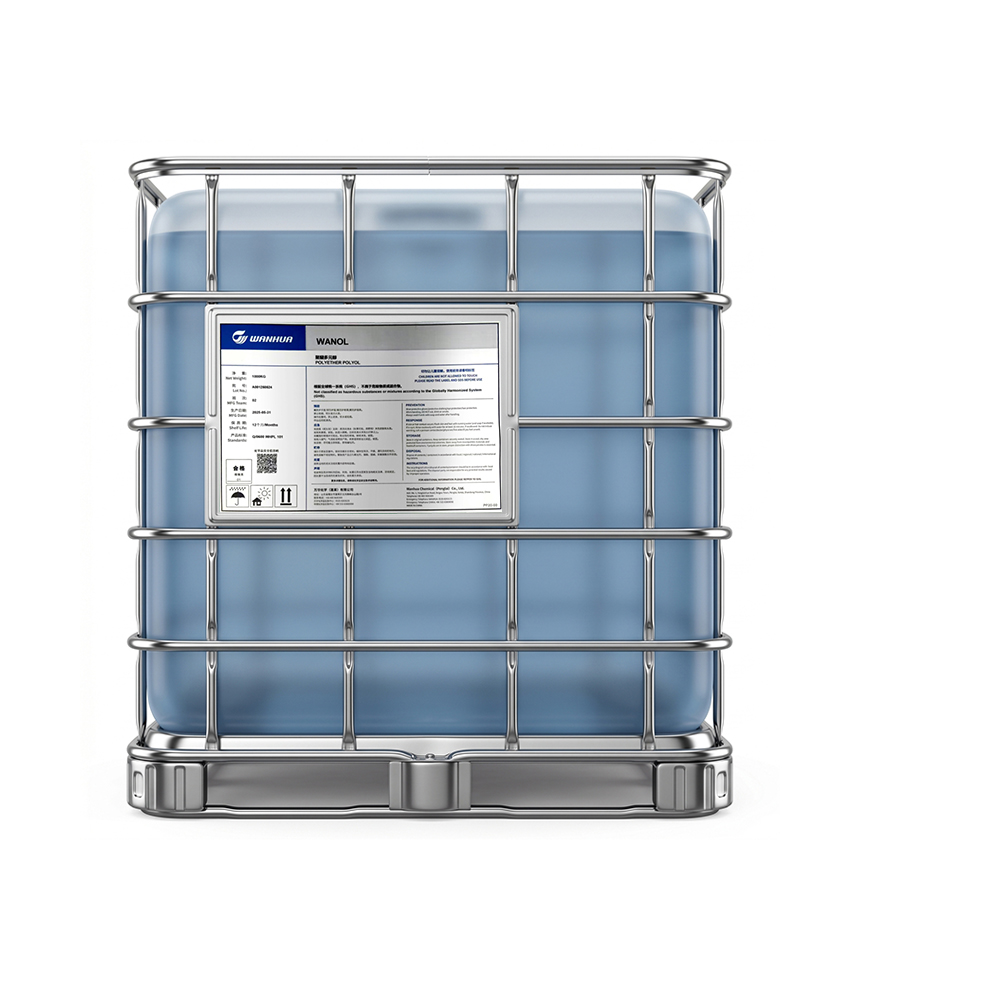
Like most polyether polyols, it should be stored in sealed containers, kept away from moisture and direct sunlight, and used within the recommended shelf life noted on the current technical data sheet to maintain reactivity and color stability.
Q3: Can WANOL F3156A Polyether Polyol be used with both TDI and Polymeric MDI?
Yes. Formulators commonly pair it with either isocyanate depending on the target foam type, adjusting the formulation index and additive package to achieve the desired density and mechanical properties.
Q4: Where can buyers source WANOL F3156A Polyether Polyol reliably?
Buyers typically work with authorized distributors that maintain sufficient stock and documentation support, such as DOMI (HK) INDUSTRIAL CO., LIMITED, to ensure consistent quality and on-time delivery.




 English
 Français
 Español