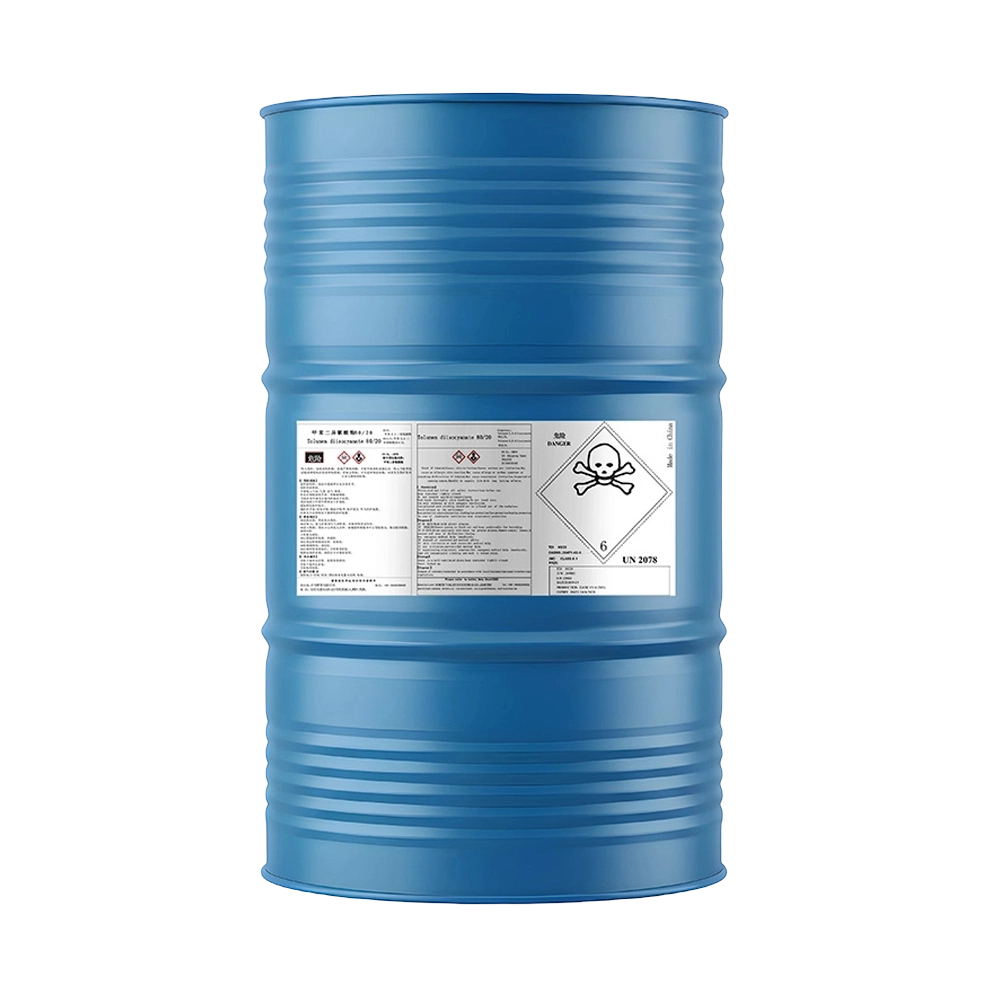
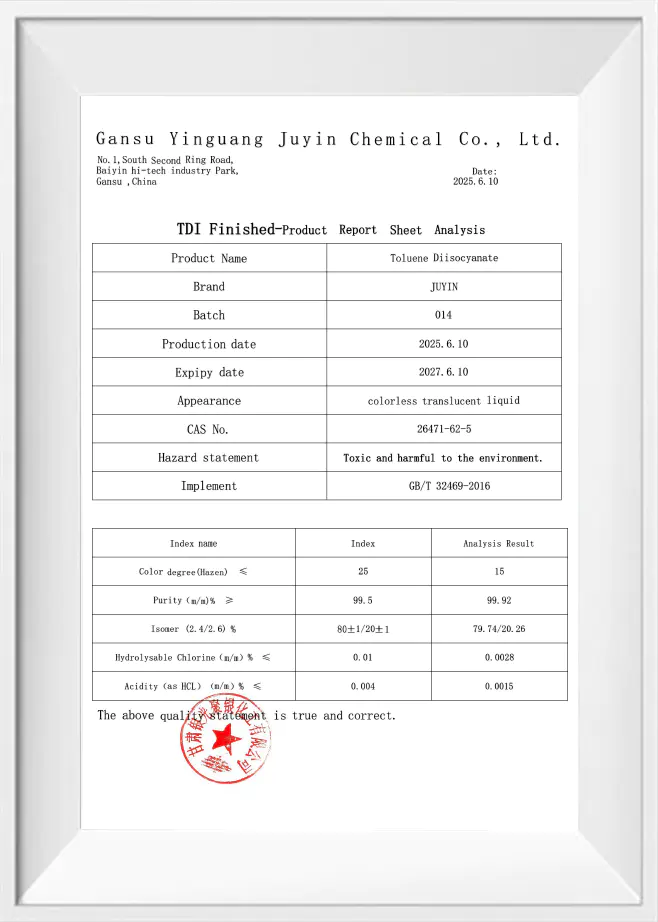
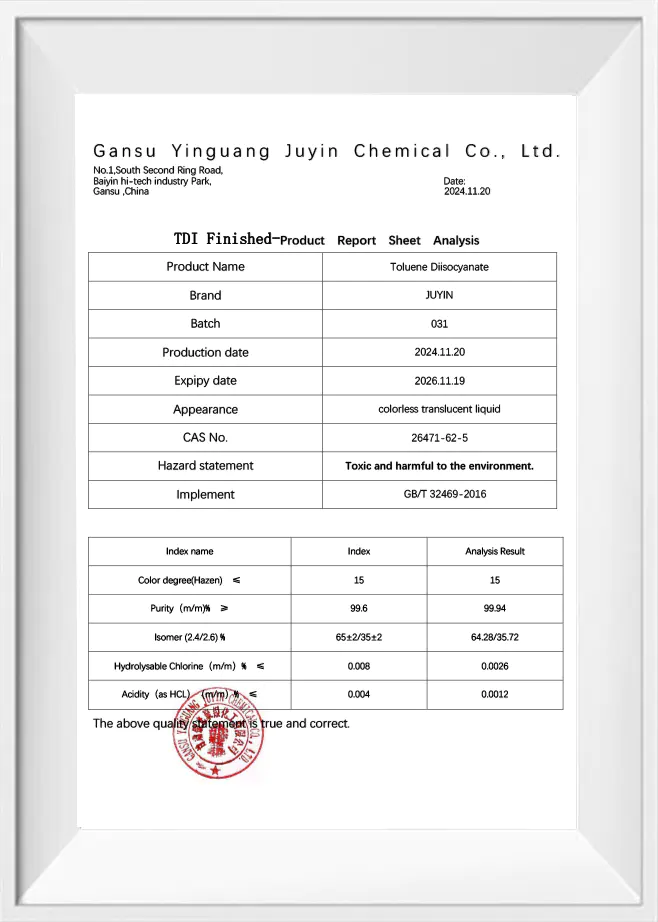
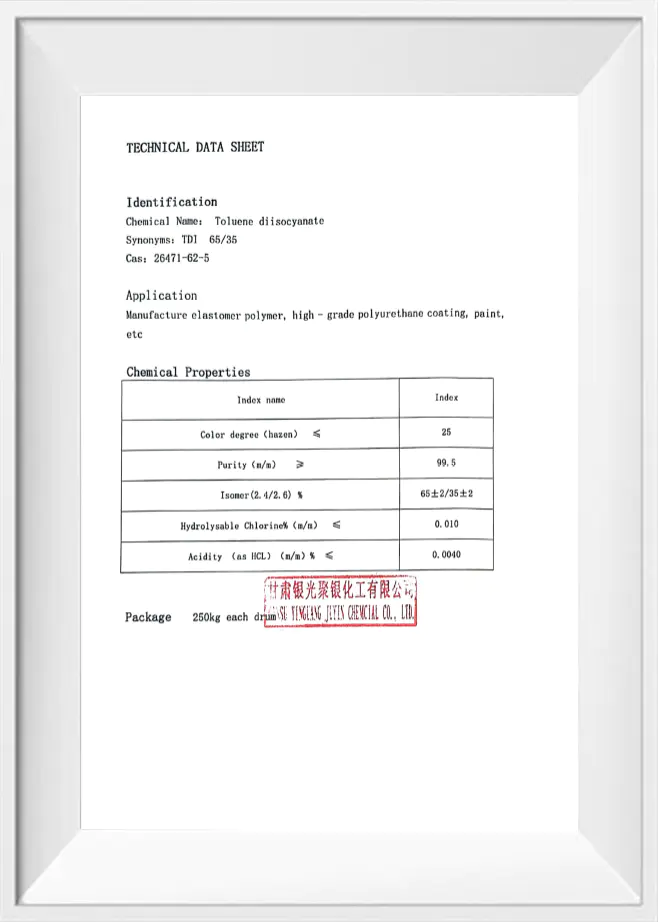
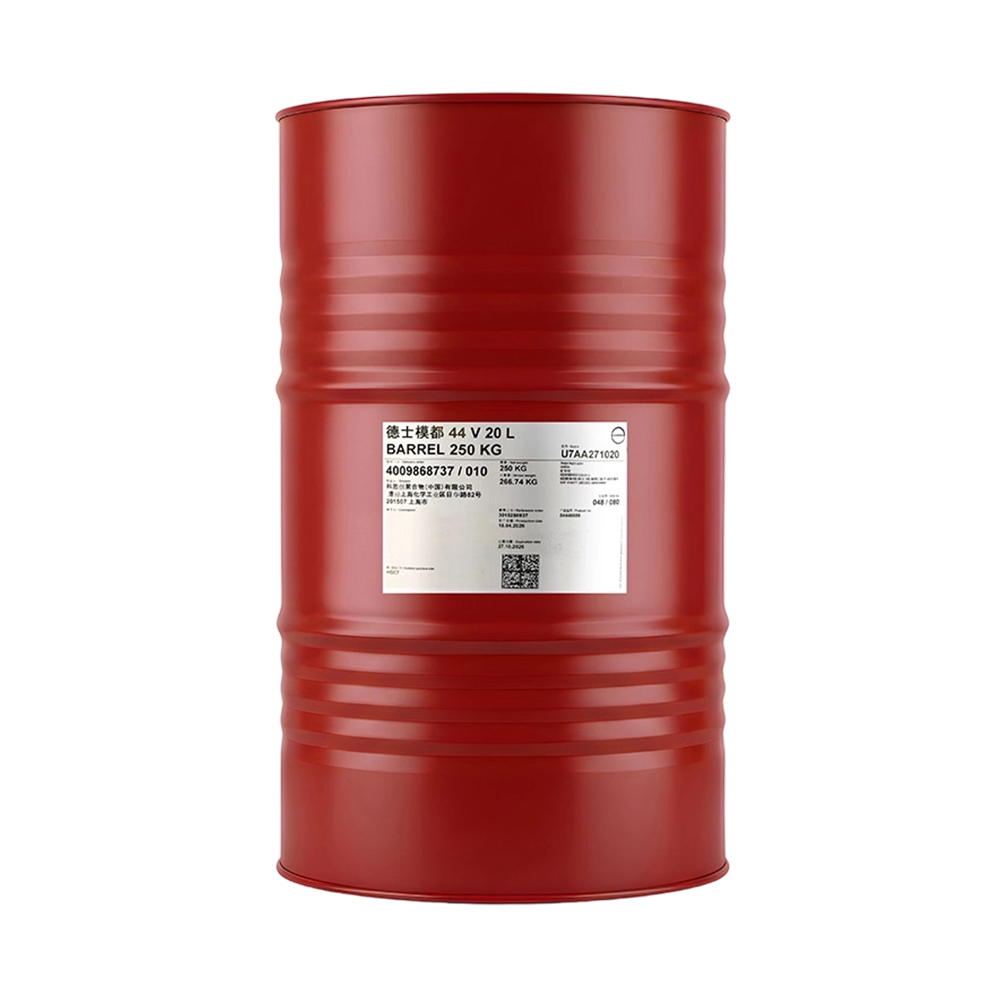
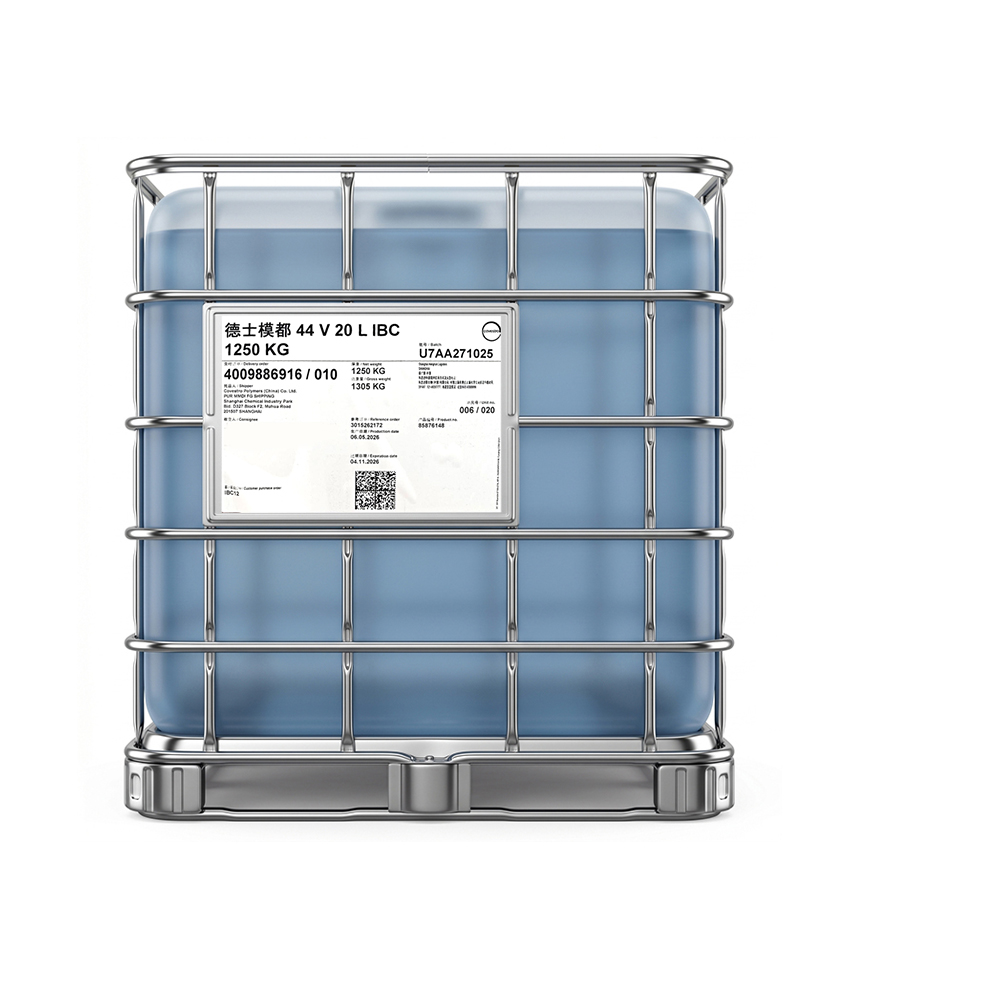
TDI 65/35 Specialty Foam Grade is a toluene diisocyanate blend with an isomer ratio of 65% 2,4-TDI to 35% 2,6-TDI, a composition significantly different from the more common 80/20 grade used in general-purpose flexible foam. This higher proportion of the 2,6-isomer slows the overall reactivity curve and changes the balance between the two isocyanate positions, which is why the 65/35 grade is classified as a specialty product rather than a general-purpose one. It is typically selected when a formulator needs a slower, more controllable reaction profile for demanding molded or high-resilience foam systems.
Key Advantages of the 65/35 Isomer Ratio
- Extended cream and gel time compared with 80/20 TDI, giving processors a wider window to fill complex mold cavities before the foam sets.
- More even reactivity between the two isomers, which can reduce localized over-curing in thick or intricately shaped foam parts.
- Better suitability for high-resilience (HR) and semi-flexible molded foam requiring fine surface detail.
- Useful for specialty formulations where a standard 80/20 or 100% 2,4-TDI reacts too quickly for the intended process.
How TDI 65/35 Works in Foam Formulation
Isomer Reactivity Differences
The 2,4-isomer reacts faster with polyol hydroxyl groups than the 2,6-isomer, largely due to steric and electronic effects around the isocyanate groups. In a standard 80/20 blend, the dominant 2,4-isomer drives a relatively fast reaction. Shifting the ratio to 65/35 increases the share of the slower-reacting 2,6-isomer, which moderates the overall cure speed and helps formulators achieve a more gradual gelling profile.
Formulation Adjustments
Because the reaction kinetics differ from the 80/20 grade, catalyst type and loading, water content, and NCO index often need to be re-optimized when switching to 65/35 TDI. Processors commonly run small-scale trial batches to confirm demold time and foam properties before committing to full production runs.
Comparing TDI 65/35 with the Standard 80/20 Grade
| Property |
TDI 65/35 |
TDI 80/20 |
| 2,4-TDI Content |
65% |
80% |
| Reactivity Speed |
Slower, more even |
Faster |
| Typical Use |
Molded/HR specialty foam |
General slabstock foam |
General comparison based on standard TDI isomer chemistry; actual foam performance depends on the full formulation.
Typical Applications for Specialty Foam Grade TDI
Because of its moderated reactivity, TDI 65/35 is commonly considered for:
- High-resilience molded foam for seating and cushioning with demanding surface finish requirements.
- Specialty foam parts with thick cross-sections, where slower gelling helps avoid internal scorching.
- Custom formulations requiring a specific balance between open-cell structure and load-bearing support.
Sourcing TDI 65/35 Through DOMI (HK) INDUSTRIAL
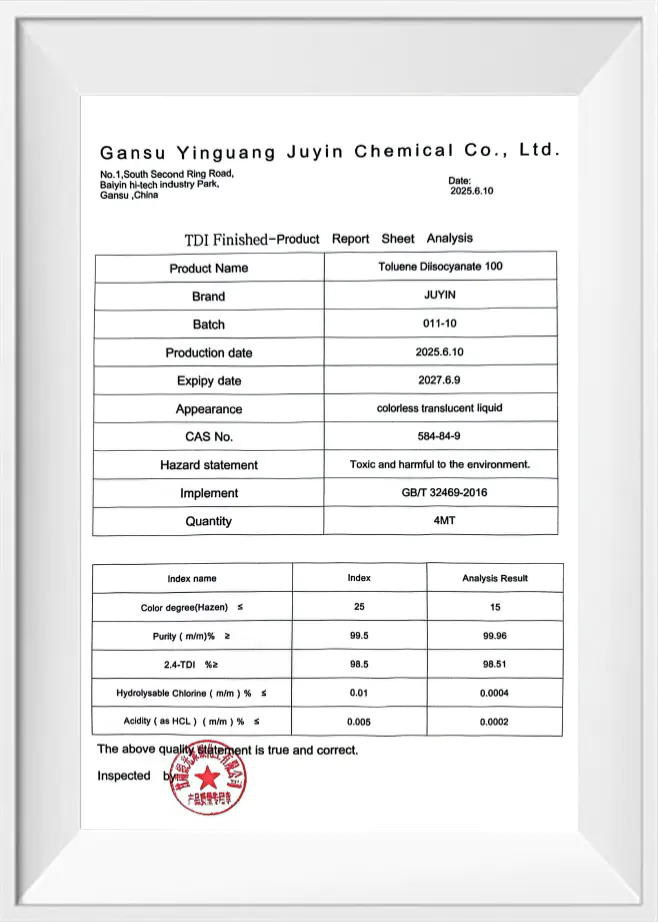
DOMI (HK) INDUSTRIAL CO., LIMITED, established in 2022 and headquartered in Hong Kong, is a trusted supplier and official authorized distributor of globally recognized polyurethane manufacturers. With annual sales exceeding 50,000 metric tons and a customer network across more than 30 countries and regions, DOMI (HK) INDUSTRIAL helps specialty foam producers secure a stable supply of TDI grades, backed by full documentation such as MSDS, TDS, and COA, along with flexible sea and land transportation options for smoother procurement.
Frequently Asked Questions
Q1: Why choose TDI 65/35 instead of the more common 80/20 grade?
The 65/35 ratio offers slower, more even reactivity, which is useful for molded or thick-section foam parts where a fast-reacting 80/20 grade may cure too unevenly.
Q2: Does switching to TDI 65/35 require reformulating an existing foam recipe?
Yes. Because reaction speed differs from 80/20 TDI, catalyst levels, water content, and NCO index typically need adjustment and trial testing.
Q3: Is TDI 65/35 suitable for standard slabstock foam lines?
It can be used, but it is primarily selected for specialty and molded foam applications where its slower reactivity provides a specific processing benefit.
Q4: How should TDI 65/35 be stored to maintain quality?
It should be kept in sealed containers in a cool, dry, well-ventilated area, away from moisture and direct sunlight, since TDI is moisture-sensitive.




 English
 Français
 Español